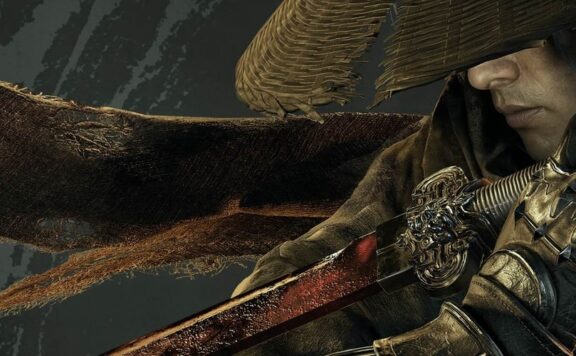
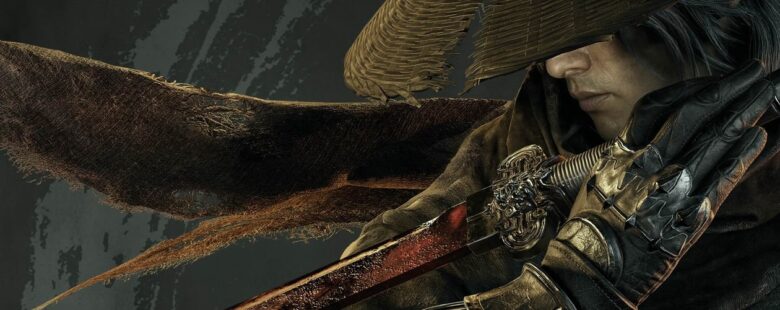
Even if Phantom Blade Zero has a protagonist called Soul, is stuffed with challenging boss battles, and regular Bells at which you save your progress, this isn’t really a Soulslike. It’s not a game that’s going to completely consume your life with grinding, repeated encounters and trekking across the map. No, it’s a game that respects your time, and I really appreciated that.
Enemies don’t respawn once you’ve cleared an area, bosses don’t force you to repeat earlier phases after you’ve died, and once you’ve unlocked a shop, you can access its wares from any Bell you rest at. Oh, and you don’t drop a puddle of experience if you die. These might sound like small conveniences, but over a 40-hour adventure, they make a massive difference. It gives you time to concentrate on the more important things, like the fighting.
Phantom Blade Zero’s combat is bloody magical to watch. It genuinely feels like being dropped into a martial arts movie. The influence of Donnie Yen is obvious throughout, from the way that protagonist Soul moves to the choreography of the fights, and the game has an almost ridiculous ability to make you feel like the coolest person alive.
At its simplest, combat revolves around regular and stronger attacks, with your Sha-Chi meter allowing you to unleash more powerful moves through simple button sequences. Blue attacks can be parried, while red attacks need to be dodged, and learning when to do each becomes second nature surprisingly quickly.

It’s the weapons that keep things interesting, though. The basic controls remain approachable, but every weapon brings its own capabilities and quirks, and I found myself constantly switching things up simply because I wanted to see what else I could do. That experimentation is encouraged rather than punished – upgrades for abilities and weapons can easily be reverted, so you’re never down a gameplay dead end.
My favourite weapon was The Fanatic’s Broken Blade. In its base form, it’s a one handed sword with a nifty moveset, but Souls can take a cheeky swig of a drink while blocking to get himself tipsy, and all of a sudden that sword can fly! All of Soul’s attacks now send the sword flying into the distance. I cannot stress to you enough how high I jumped out of my chair when this happened the first time, and it can be expanded further by getting fully drunk to unleash more devastating attacks. This is just one of the many, many weapons in the game, as well.
Then there are the Phantom Edges. These provide another layer to combat, with their uses tied to your Remnant Spark, but they’re not simply another collection of attacks to throw at an enemy. Some can also be used outside combat to open up new areas and discover additional rewards.
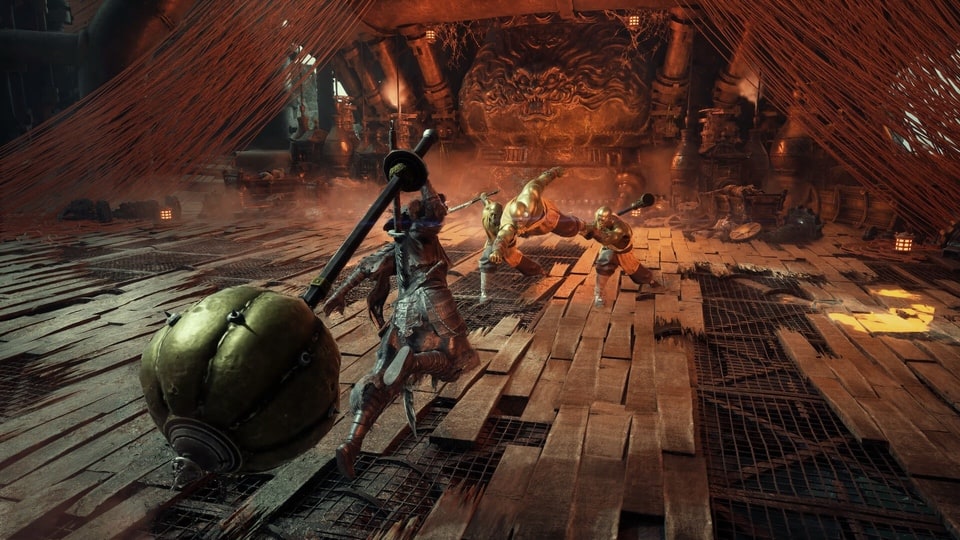
My favourite was probably the Thunder Spear. There is something immensely satisfying about launching it into a battlefield and watching the entire encounter light up around you. That said, the Flying Guillotine was also a ton of fun, breaking through enemy shields with ease and letting you just saw off enemy heads when their health was low enough. Again, the variety here is astounding. Between bows, cannons, shields, axes, hammers, and items that let you summon adds in to help you, you really are spoilt for choice on the way you want to play. There’s even a Horse Driven Cart Phantom Edge – you read that correctly.
This is a game that understands the importance of spectacle. The cutscenes lean heavily into classic Chinese cinema and are wonderfully over-the-top, occasionally ridiculous and absolutely dripping in wuxia style. Characters move with that almost impossible grace, the action regularly borders on absurd. I loved every second of it.
The music only adds to that feeling, the KungFuPunk-inspired soundtrack blending traditional influences with the game’s heightened presentation, creating something that sounds every bit as distinctive as the game looks. The voice acting is excellent, too, and together they make the world incredibly easy to get lost in.
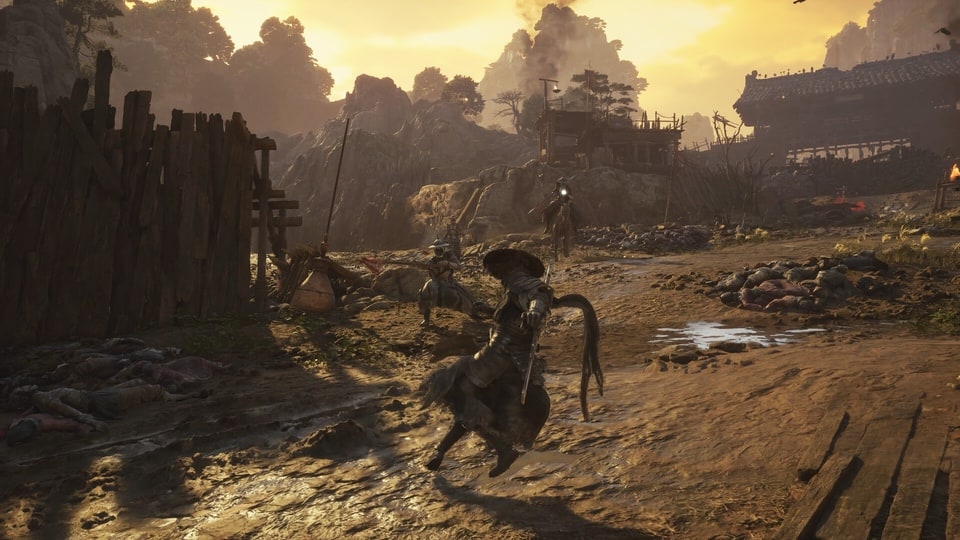
And what initially appears to be a fairly straightforward action game has considerably more going on underneath. The story is excellent, with Soul’s journey gradually revealing more about his past and the world around him. You can follow the very clear path through the story, if you want, taking the most direct path and concentrating on the major objectives, but if you slow down and actually investigate what’s around you, the game rewards you. It’s not always just gear with bigger numbers or new equipment, but lore that can expand the setting, give context and help during encounters. In one instance, finding everything I could before a particular boss fight actually unlocked something extra during the encounter itself – another moment that had me jumping from my seat.
That philosophy extends to the game’s challenge content and optional activities, with additional rewards waiting for players willing to dig deeper. There are even challenge areas and extra content tied into unlocking a secret ending. It makes Phantom Blade Zero feel like a game worth exploring rather than one you’re simply trying to finish.
And thankfully, the world is gorgeous enough that you’ll want to explore it. The maps are enormous, beautifully presented and use a hand-drawn Chinese-inspired style that makes them feel like something pulled straight from an old martial arts epic. They give you a proper sense of the areas you’ve explored and, more importantly, make it easy to spot places you haven’t fully investigated yet. With so many little paths, tucked-away areas and secrets scattered around, that makes exploring feel like you’re actually learning the shape of the world rather than just following a marker from A to B. The game embraces its cultural influences rather than simply using them as aesthetic wallpaper.
The difficulty is also more flexible than you might expect. Pathbreaker equates to “normal” and provides an easier way into the game while still making you pay attention, while higher difficulties really test your patience, ability to read attacks and willingness to learn enemy patterns.
This isn’t a game where you can simply switch off and mash your way through everything and the bosses in particular are exceptional. The Lion Dance Grandmaster remains one of my favourites, partly because it absolutely destroyed me. Bai Chilian is another standout, and there are several other fights that really stuck in my memory. Phantom Blade Zero understands what makes a great boss fight work. They’re spectacles, skill checks and memorable encounters all at once.
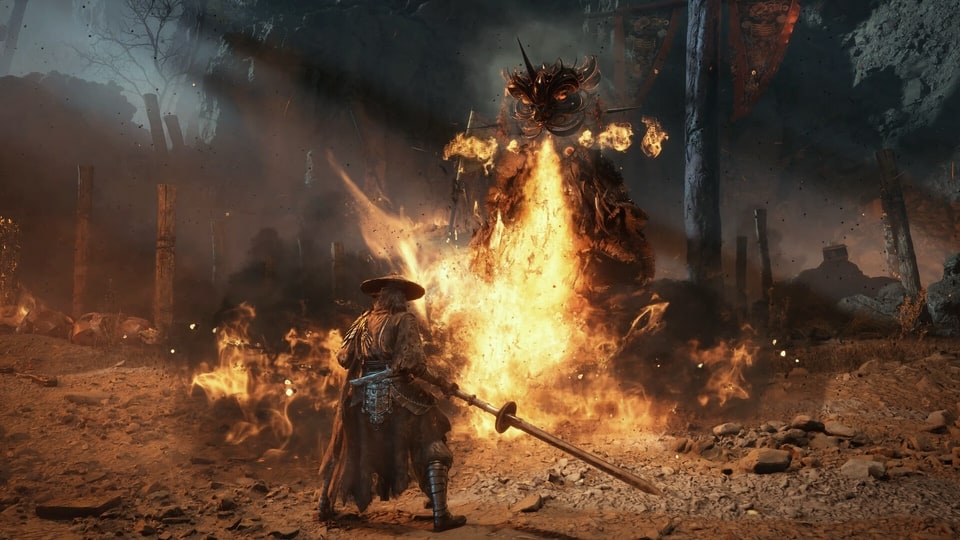
Crucially, the game respects your time even when it’s kicking your arse. If you die during a multi-phase boss fight, you’re not necessarily condemned to repeat everything you’ve already mastered. Once you’ve proven you can handle an earlier phase, you’re given grace and are able to jump back in at the stage where you fell. After playing countless games where dying during the final phase means spending another five minutes proving that you can beat the first phase again, this feels fantastic.
The same applies to the rest of the progression. By the end of my 40-hour playthrough, I felt considerably more powerful than I did at the beginning, but I never felt like I had been grinding my way towards that power. In addition to grabbing upgrades, I had learned the weapons, understood the combat systems and become better at reading what the game was throwing at me. There was always something new to learn. New enemy types kept appearing, new weapons gave me another reason to experiment and combat never reached the point where I felt like I was simply going through the motions.
Technically, my experience on PS5 was largely excellent. Performance mode ran smoothly for me, though a pre-release patch did introduce a texture issue that I fixed with switching modes – doubtless something that will soon be ironed back out. Aside from a couple of minor issues, I didn’t encounter anything significant enough to sour the experience.
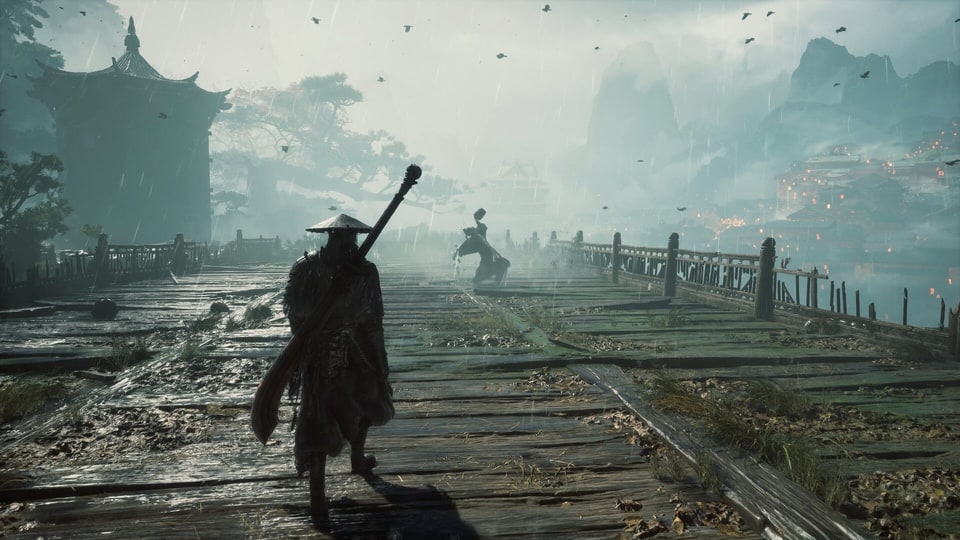
And that’s ultimately what makes Phantom Blade Zero so difficult to put down. At first glance it looks like a Bloodborne-inspired action RPG, but it’s much closer to a traditional character-action game. Everything is built around making you feel like an absolute badass rather than grinding you down through attrition. It borrows some familiar ideas, but it does something distinctly its own.
After around 40 hours, I reached the finale having spent the entire game trying to uncover Soul’s past, helping the people I encountered, collecting increasingly ridiculous weapons and throwing myself against some truly electrifying boss battles. And then the game got me again, and genuinely brought a tear to my eye.
That’s when I realised just how much Phantom Blade Zero had got under my skin. This has become one of my favourite games of the year, and quite possibly one of my favourite action games in years.