Reviving its PC racing game series after more than a quarter of a century, Milestone – the developers of Ride, MotoGP, and Hot Wheels Unleashed – is really mixing things up with Screamer. Back in the 90s, Screamer served as a competitor against fledgling 3D racing games like Ridge Racer, though it’s fair to say that the genre has changed massively since the mid 90s. It’s an interesting choice, then, to imbue the Screamer reboot with such a distinct vibe evocative of that era. With a bold anime-inspired visual style, it’s a real eye-catcher, but is this a case of style over substance, or is Screamer a new must-play racer?
Milestone’s commitment to crafting an anime-style plot for its arcade racer is admirable, though its ultimate value is questionable. The narrative centres on various teams competing in a high-stakes racing tournament for an exorbitant prize pot of a hundred billion dollars, though you’ll quickly come to realise that some characters have more personal motives for participating beyond bagging themselves the jackpot.
For a racing game there’s a surprising amount of depth to the characters and game world Milestone has created here. The more you play of Screamer’s main Tournament mode, the more you see each racer’s storylines unspool and intertwine, though the quality of the writing can be hit and miss, leaning on anime melodrama and trie-hard edginess. It’s nice for a game of this genre to provide an extra hook beyond what’s happening on the track, but Screamer’s visual novel cutscenes can often overstay their welcome, padding out those first few initial hours when you really want to quickly get to grips with its unusual take on racing itself.
The core gameplay loop of Screamer is a traditional stage-by-stage racing experience, playable across the aforementioned Tournament, a selection of offline arcade modes, and online multiplayer. Out on the track, there’s a steep learning curve, primarily due to Screamer’s dual-stick control system used for steering and drifting. When you layer these inputs on top of braking, accelerating, and the use of power ups, the controls often feel clunky with a bit too much going on at once. It can be tough to master, especially when you’re cycling between the different vehicles in Tournament, but when it clicks it can be immensely satisfying to hit the perfect race line at breakneck speed without scraping a single barrier.
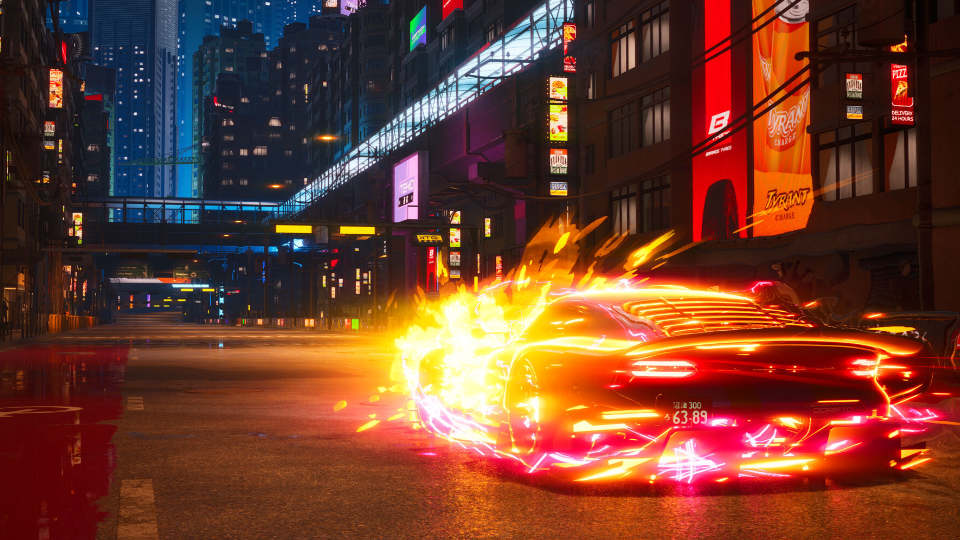
Screamer’s story-infused races are where you’ll spend most of your time as you learn the ropes, though it takes a while for the training wheels to come off. After learning the basics of vehicle handling, you’ll slowly be introduced to the intriguing fighting game-inspired gauge system. One gauge can be spent on speed boosts, which then feed into the other to let you activate shields or trigger a powerful shunt manoeuvre. Thinking tactically about when to store or spend your energy – on top of the core racing action – adds a strategic layer to Screamer. Each character then has their own unique ability that comes into play which, combined with other gameplay concepts, adds some depth and complexity for those players who stick with it.
Those who prefer a more casual arcade racer they can dip in and out of may struggler, however. Even on the lowest rung of the difficulty ladder, Screamer can be pretty punishing. Playing the game pre-release, the first proper tutorial race took us a dozen or so attempts to get a podium finish thanks to overly aggressive AI racers that quickly left us in the dust with absolutely no chance of rejoining the pack. While hardcore fans of the genre have come to loathe incessant hand-holding and “rubber banding”, Screamer pushes a little too hard in the opposite direction before players have even grasped the very basics. Post-launch, the Tournament difficulty is slightly more accommodating, though it’s far from being a cakewalk.
The purest way to enjoy Screamer will be pitting yourself against other human racers. There are options for local four-player splitscreen as well as online races with a max lobby limit of sixteen. Here you’ll get to see all of Screamer’s gameplay nuances in action as other competitors liberally deplete their sync gauges in an effort to pull ahead, with cars exploding left, right, and centre. Sadly, if you’re unable to join a full lobby, Screamer will fill any empty slots with AI racers who can often dominate the scoreboard and heavily influence Team Races.

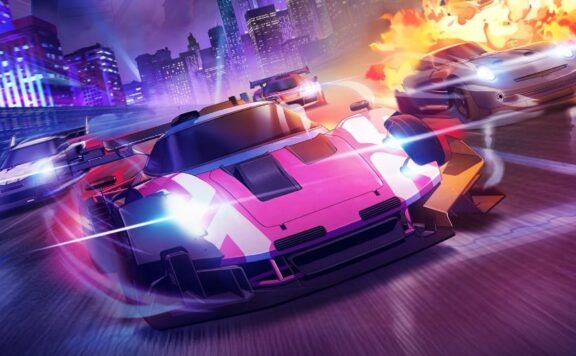
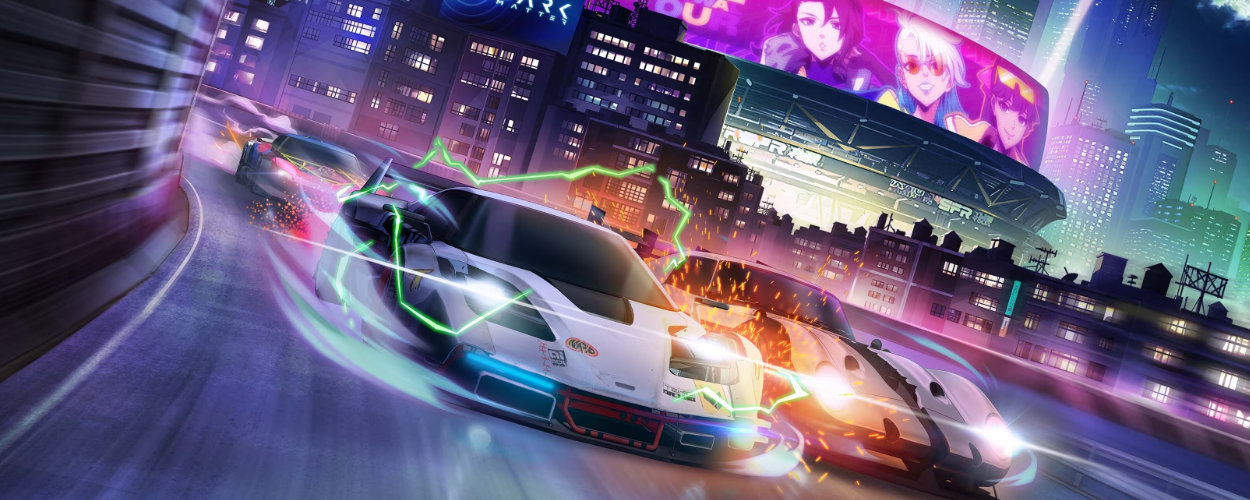
Away from the racing itself, Screamer’s visual design gives it some added nuance that didn’t exist in Milestone’s original run of games. There’s a dual aesthetic here that combines the polished, clean look of a modern racing game with a futuristic, high-energy anime art style. The soundtrack is a good listen as well and dovetails nicely with the on-track action though there’s nothing particularly outstanding about the voicework. It may sound like a neat concept on paper, but having each character’s lines dubbed in their own native tongues creates a strange mishmash of languages during cutscenes that made us more detached from the narrative.